
Since 1999, we've delivered accredited and bespoke training that builds confident leaders, developing decision-making and coordination skills required to perform effectively across incidents, emergencies, and crises under real-world pressure.
As a UK Approved Training Centre endorsed by Skills for Justice Awards (SFJA) Berwicks is able to design, deliver and assure accredited training and capability development to clients around the world.
SFJA is an awarding organisation recognised by the Office of the Qualifications and Examinations Regulation (Ofqual) and is the custodian of the UK regulated National Occupational Standards (NOS). These standards define competence in a function, activity or role.
Our accredited courses align with the UK’s NOS and carry ‘achieved’ certification status. This higher level of award demonstrates verified performance competency against regulatory assured standards.
Berwicks create bespoke and tailored training and capability development courses to enhance individual and team performance. We specialise in ensuring that training is outcome focused and sustains long term capability.
We are recognised and retained by global brands to deliver world class training.
You are. Accountability does not transfer. What transfers is the work of running it, and the responsibility for telling you the truth about where it stands. Berwicks reports what is actually happening, including when that is not what you wanted to hear.
A project delivers one thing. A programme delivers several that depend on each other, so the job is managing what happens between them. A PMO does neither. It reports on both. Berwicks runs programmes rather than reporting on them.
You keep the plan and lose the reasoning. Why things were done that way, what was already tried, who to call before anything moves. The next person spends months working it out again. Berwicks picks programmes up mid-flight and rebuilds that picture quickly.
When the programme has got bigger than the person running it, or when the person accountable for delivery also runs the operation it disrupts. Berwicks takes on the running of it so the accountable person keeps the decisions without carrying the load.
Dates keep moving. The same risks sit there month after month. Nobody decides anything. If you cannot tell what has changed since the last report, that is your answer. Berwicks gives you an honest read on where a programme actually is.
Skills for Justice accreditation means our incident command training has been independently assessed against recognised sector standards for content, delivery and assessment. It gives clients confidence that the programme meets an established external benchmark rather than an internally defined one.
Strategic, Tactical and Operational command is the terminology that aligns with JESIP - the Joint Emergency Services Interoperability Principles. Established in 2012, JESIP is the UK's multi-agency command framework that is also adopted across many high hazard, complex industries.
Training develops the distinct skills and competencies needed at each level of incident command. Each level is trained separately because the decisions, information and pressures involved are different. JESIP replaced the previously used Gold, Silver and Bronze terminology.
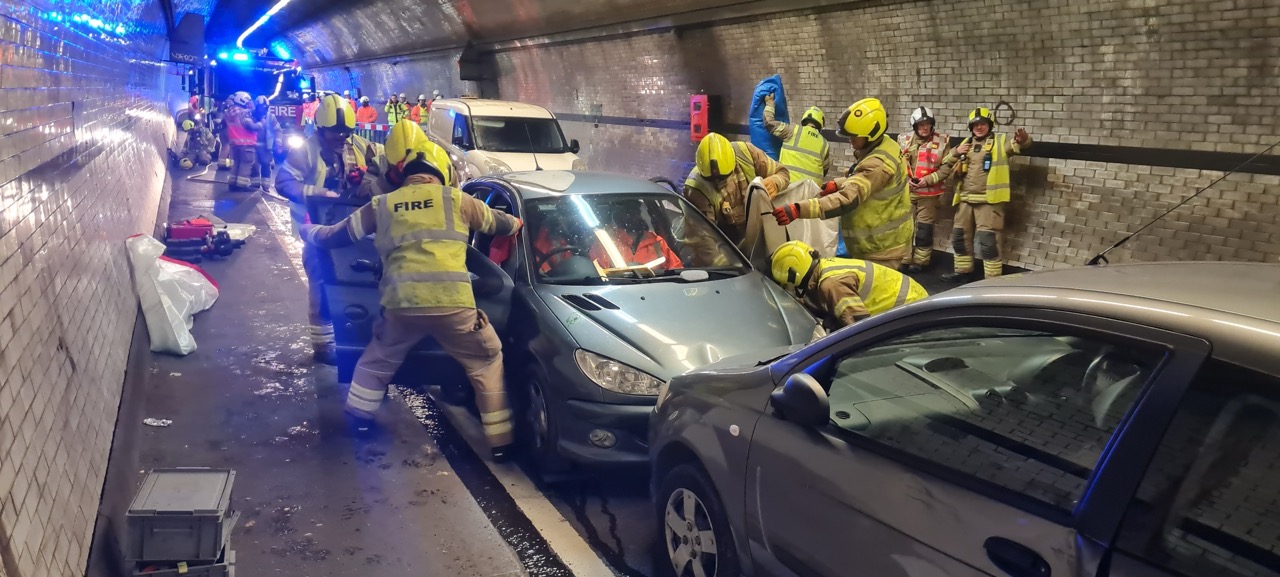
Operational (Bronze) command manages the immediate response at the scene; tactical (Silver) command coordinates resources and priorities across the wider incident; and strategic (Gold) command sets overall direction, manages external stakeholders and protects the organisation's long-term interests. Each level needs to understand its own remit and how it interfaces with the others.
Training is properly embedded when your team can demonstrate command, coordination and decision-making under realistic pressure, not simply when a course has been completed. We assess this through structured exercises and independent evaluation against defined performance criteria, so you have evidence rather than assumption.
This depends on role, turnover and how frequently real incidents occur, but most high-hazard organisations need refresher training and exercising at least annually, with more frequent practice for command roles. We can help set a training and exercise cycle appropriate to your risk profile.
Assume it becomes an operational and commercial crisis, not a technical one. Plan for degraded systems, manual workarounds, communications that do not depend on the network, and early Regulator engagement, then rehearse with the executives who will carry it. Berwicks supports the UK nuclear estate, energy and defence clients, and designs cyber simulations that test decision making when the usual tools are gone.
Keep senior leaders away from the technical fix and on the consequences. Cash, customers, contracts, supply chain, Regulators and reputation all move faster than the incident itself. Berwicks works alongside leadership teams before, during and after events, holding governance through recovery where value is most often won or lost. We have done this in high consequence industries since 1999, boardroom to frontline.
Protect life, stabilise the situation, then move the executive team into strategic mode. Set priorities, agree decision rights, build a reliable operating picture and look past the incident to cash, customers, contracts and regulators. During Hurricane Harvey our embedded team spotted a cash flow event holding up roughly $300m of invoicing. Berwicks supports leaders live, not only beforehand.
One source of truth, a disciplined reporting rhythm, agreed information standards and somebody who owns it. Without that, every function arrives with a different version of events and decisions slow to a crawl. Berwicks builds information management into crisis arrangements then proves it under pressure in exercises. It was central to one client restoring production in 14 days rather than six months.
Practise together. Technical teams fix technical problems. The executive job is strategic priorities, direction and protecting enterprise value while others handle the incident. Berwicks develops Crisis Management Teams for CEOs and boards, then tests them with realistic scenarios, coaching and accredited training. Our consultants have led people through genuine adversity in the military, emergency services and industry, not just in theory.
Start with what the business must keep doing, then work back to the people, systems, sites and suppliers behind it. Berwicks joins up crisis and incident management, business continuity and enterprise risk so they behave as one capability rather than three separate documents. We build around the organisation you already have, keep it proportionate, then embed the habits into daily operations.
Take away the tools they rely on. Berwicks was appointed to run a series of cyber crisis simulations for a high value megaproject, testing response plans plus the alerting and information systems bought specifically for use when networks are down. Cyber turns commercial fast, hitting production, customers, cash and regulators. We test the business decisions, not the firewall.
Start with the risks that could genuinely hurt the business, then design a scenario forcing real trade-offs with incomplete information. No script reading. Berwicks designs and runs tabletop, live and full-scale simulations, applying pressure through media, regulators, staff and third parties. We debrief honestly and tell you what we saw. The friction it exposes is the whole point.
An outside team sees what familiarity hides. Berwicks combine governance analysis, leadership interviews, operational observation and cultural insight to show how risk really works in your business, not how the paperwork says it does. You get an exposure view, a capability assessment, the material gaps and prioritised recommendations. Low cost, light touch and valuable in its own right.
If your executive team has never made hard decisions together under pressure, your plan is still an assumption. Berwicks runs an independent Risk and Crisis Management Review looking at people, plans, governance, information flow and decision rights, then tests them against your real risk profile. You get an honest view of the gaps and what to fix first. If you are in good shape, we say so.
We reduce uncertainty and move forward with confidence. If you’re navigating risk, resilience or delivery under strain, let’s talk.
About us


© Berwicks 2026.
Berwicks is registered with Companies House at
6 Logie Mill, Beaverbank Business Park, Edinburgh,
Lothian EH7 4HG in United Kingdom.
Company Number SC257822.
Website designed and built by Transform Comms